
Self-managing a rental property can give you greater control over decisions, communication and the way your home is cared for. It also makes you responsible for every system that a management company would normally coordinate, from marketing and occupant communication to maintenance, documentation and local requirements.
For San Clemente owners, the workload depends on whether the property is a long-term or vacation rental, how close you live, how much time you can consistently provide and whether you have dependable local vendors. The condition of the home, its eligibility for the intended rental use and your desired level of involvement matter too.
Before deciding to self-manage, it helps to understand the complete operating picture. This guide explains how to self-manage a rental property in San Clemente, the core responsibilities, the systems you will need and the situations in which outside support may become worthwhile. You can also explore rental and property management options in San Clemente if you want to compare self-management with professional support.

Can You Self-Manage a Rental Property in San Clemente?
Yes, owners can generally self-manage a rental property in San Clemente. However, doing so means accepting responsibility for its operations, communication, maintenance, records and compliance with requirements applicable to the rental model.
Self-management is not automatically the right or wrong choice. It may work well when you:
- Live close to the property
- Have enough time and availability
- Understand the rental model you have chosen
- Have reliable cleaners, contractors and service providers
- Can respond when unexpected problems arise
- Maintain organized financial and property records
- Are comfortable communicating with tenants or guests
- Can monitor applicable state and local requirements
It can become more difficult when you live far away, have limited availability or cannot provide dependable physical oversight. A rental may appear easy to manage during quiet periods, but the real test comes when a repair, access problem or occupant concern requires a prompt response.
If you want a broader overview of the work involved, read this guide to managing a rental property in San Diego.
What Does Self-Managing a Rental Property Actually Involve?
Self-management means becoming the operating system behind the rental. The specific tasks vary, but the principal rental property owner responsibilities usually include preparing the home, finding occupants, managing communication and payments, coordinating property care and maintaining accurate documentation.
Preparing and Marketing the Property
Before advertising the home, you need to decide how it will operate. A long-term rental and a vacation rental require different preparation, listing strategies and service standards.
Typical responsibilities include:
- Preparing the property for tenants or guests
- Selecting an appropriate rental strategy
- Writing an accurate property description
- Arranging professional photography when needed
- Publishing and maintaining listings
- Responding to inquiries
- Keeping rates or availability information current
- Setting clear expectations about the property and its use
The listing must accurately represent the home. Incorrect amenity details, outdated photographs or unclear restrictions can create problems before an occupant even arrives.
Screening Tenants or Evaluating Guests
For a long-term rental, an owner may need to establish application procedures, use consistent qualification criteria, screen prospective tenants, document decisions and prepare the lease and required disclosures. The process should be fair, consistent and compliant with applicable housing and consumer laws.
For a vacation rental, the focus shifts to reservation requirements, guest verification, occupancy expectations, house rules and clear communication about permitted property use. An owner must also decide how to respond when a reservation appears inconsistent with those requirements.
This article provides general educational information, not legal advice. Owners should confirm current California and local requirements and consult qualified professionals when appropriate.
Long-term rental owners should also review the California Department of Real Estate’s current guide to California landlord and tenant rights and responsibilities and consult qualified professionals when necessary.
Managing Communication and Payments
Communication demands vary considerably between rental models.
With a long-term rental, you may handle tenant questions, monthly rent collection, payment records, lease notices, renewal discussions and move-in or move-out coordination. Although the frequency may be lower, each interaction can involve formal documentation and deadlines.
When self managing a vacation rental, communication is usually more frequent. Responsibilities can include booking inquiries, pre-arrival messages, check-in instructions, questions during the stay, after-hours issues and review follow-up. Even when automated messages are used, someone must remain available when the situation falls outside the template.
Coordinating Cleaning, Maintenance and Vendors
Finding a vendor is only the beginning. When something goes wrong, the owner must determine its urgency, arrange access, schedule the work, communicate with the occupant, approve expenses, document what happened and confirm that the repair was completed properly.
For vacation rentals, the home may also need to be inspected, cleaned and reset within a narrow window between stays. For long-term rentals, repairs must be coordinated with the tenant while respecting the lease and applicable access requirements.
Coastal properties deserve particular attention. Salt air, moisture, wind and frequent use may affect exterior hardware, locks, windows, decks, railings, outdoor furniture and HVAC equipment. Regular observation helps identify developing issues before they become larger repairs.

Long-Term and Vacation Rentals Require Different Systems
Not every San Clemente rental operates the same way. The workload, communication rhythm and property-care schedule depend heavily on whether the home is rented for longer periods or turns over frequently.
Self-Managing a Long-Term Rental
A long-term rental typically follows an extended lifecycle:
- Property preparation
- Marketing and inquiries
- Applicant screening
- Lease administration
- Rent collection
- Maintenance coordination
- Periodic inspections
- Renewals
- Move-outs
- Security-deposit documentation
The slower cycle does not eliminate operational responsibilities. Owners still need a repeatable process for rent collection, maintenance requests, records, inspections, notices and tenant transitions. Missed documentation or delayed communication can create avoidable problems later.
Homeowners who want these responsibilities handled for them can explore long-term rental management support.
Self-Managing a Vacation Rental
Vacation rentals operate through shorter, repeated cycles. Common vacation rental owner responsibilities include:
- Calendar and reservation management
- Rate and availability updates
- Guest communication
- Check-in and access coordination
- Cleaning and same-day turnovers
- Restocking essential supplies
- Property checks
- Review management
- Emergency support
- Monitoring local compliance
Self managing a vacation rental therefore requires both digital organization and reliable local execution. A synchronized calendar cannot verify that a cleaner completed the turnover, and automated messages cannot inspect a reported leak.
If that operating cycle exceeds your available time, professional short-term rental management can provide a more structured alternative. Owners who are still comparing operational models can review the differences between full-service management, co-hosting and self-management.
San Clemente Short-Term Rental Requirements Owners Must Consider
Before advertising a home for short stays, verify that the property is eligible for the intended use. San Clemente defines short-term lodging as renting a dwelling unit for 29 or fewer consecutive days. The city distinguishes between Short-Term Lodging Units (STLUs) and Short-Term Apartment Rentals (STARs), and applicable uses require a permit and an operating license.
The city states that STLUs are allowed only in certain mixed-use and multifamily residential zones and are subject to additional zoning standards. STARs provide a separate pathway for qualifying multifamily properties outside those areas, with their own ownership, on-site presence, distance and operating requirements.
Depending on the property and rental model, short term rental requirements may involve:
- Confirming zoning and property eligibility
- Obtaining the applicable STLU or STAR approval
- Maintaining an annual operating license
- Following occupancy, parking and operational standards
- Collecting, reporting and remitting transient occupancy tax
- Maintaining required records
- Monitoring permit and license renewal dates
San Clemente currently applies a 10% transient occupancy tax to vacation-rental charges, including rent and certain related fees. The city indicates that STLU returns are due quarterly, within 30 days after the end of each calendar quarter. It also identifies circumstances that can cause permits to expire, including a change in ownership, a year of nonuse, failure to renew the operating license or revocation of that license.
This is intentionally a high-level overview because local rules can change. Before publishing a listing or accepting a reservation, review the City of San Clemente’s current Short-Term Lodging Unit information and Transient Occupancy Tax guidance.
Rental regulations, eligibility standards, permit costs and tax requirements may change. Property owners should confirm current information directly with the City of San Clemente and consult qualified legal or tax professionals when necessary.
Can You Manage a San Clemente Rental Remotely?
It is possible to manage rental property remotely, but remote administration is not the same as complete remote operation.
Many responsibilities can be completed online, including:
- Reviewing applications or reservations
- Updating listings
- Communicating with tenants or guests
- Monitoring payments
- Reviewing calendars
- Organizing records
- Approving repairs
- Reviewing inspection or maintenance updates
The limitation appears when a task requires someone at the property. Managing a San Clemente rental remotely still requires dependable local support for:
- Giving vendors access
- Inspecting reported damage
- Confirming cleaning quality
- Resolving lock or entry problems
- Verifying completed repairs
- Responding to urgent maintenance
- Preparing the property between occupants
- Checking the home after severe weather or an unexpected event
The key question is not simply whether a task can be completed online. It is who will physically represent you when something must happen at the home. Without a trusted local person or service network, a routine problem can become a stressful coordination exercise.
Systems You Need to Self-Manage Successfully
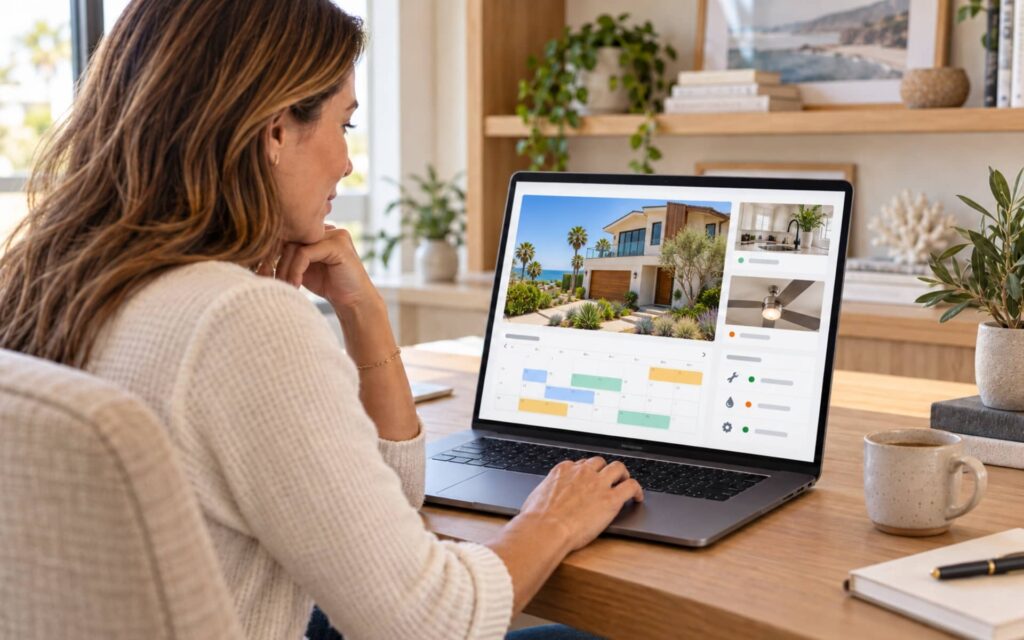
Successful self-management depends more on repeatable systems than on improvisation. Written procedures reduce uncertainty and make it easier to maintain consistency when you are busy, traveling or responding to several issues at once.
Communication System
Create clear response expectations for routine questions and emergencies. Keep messages organized, prepare templates for recurring situations and establish backup coverage when you are unavailable.
For vacation rentals, define who answers after-hours guest concerns. For long-term rentals, decide how maintenance requests, notices and important tenant communications will be documented.
Maintenance and Vendor System
Build a reliable contact list before an emergency occurs. Include appropriate vendors for plumbing, electrical work, HVAC service, cleaning, locksmith needs and general repairs.
Your process should cover:
- How repair urgency is evaluated
- Who can approve an expense
- How a vendor receives access
- Who communicates with the occupant
- Where photographs and invoices are stored
- How completed work is verified
- What happens when the preferred vendor is unavailable
Financial and Documentation System
Maintain organized income and expense records, receipts, invoices, payment histories, leases or reservation details, maintenance records and permit or license renewal dates. Your system should make it possible to trace what happened, when it happened and what it cost.
Keep tax-related documentation organized for the appropriate professional, but do not rely on general online guidance as a substitute for individualized tax advice.
Inspection and Quality-Control System
Property checks help owners understand the condition of the home beyond what appears in messages or invoices.
For vacation rentals, quality control may include turnover verification, supply checks and inspection of high-use areas. For long-term rentals, the timing and scope of inspections should follow the lease and applicable legal requirements governing notice and access.
When Self-Management May Work Well
Self-managing a rental property may be realistic when:
- You live near the home
- You manage only one property or a small portfolio
- The property is in good condition
- You have dependable cleaners and maintenance vendors
- Communication demands fit your schedule
- You understand the rental model
- You enjoy operational involvement
- You have backup support
- Your records and procedures are organized
The strongest self-managing owners are not necessarily the ones who do every task personally. They are the ones who build dependable systems, know when to delegate specialized work and remain consistently informed about the property.
When It May Be Time to Get Help
Needing assistance does not mean that self-management has failed. The rental may simply require more time, local presence or infrastructure than you can provide consistently.
Common warning signs include:
- You live far from San Clemente
- Messages regularly interrupt work or personal time
- Repairs are repeatedly delayed
- Reliable vendors are difficult to coordinate
- The property’s condition is becoming harder to monitor
- Cleaning or turnover quality is inconsistent
- Financial or maintenance records are incomplete
- Local requirements feel difficult to track
- The rental has expanded beyond your available capacity
- Daily management is affecting the lifestyle you wanted from ownership
If several of these issues are recurring, it may be useful to examine when hiring a property manager may be worthwhile. The purpose is not to give up control; it is to decide which responsibilities you want to retain and which ones need a more dependable operating structure.
Questions to Ask Before Self-Managing a San Clemente Rental
Use these questions as a practical readiness check:
- How close do I live to the property?
- Who can access the home when I am unavailable?
- Can I respond consistently to tenants or guests?
- Do I have dependable cleaners and maintenance vendors?
- Am I comfortable maintaining detailed records?
- Do I understand the requirements for my rental type?
- Who handles emergencies when I am traveling?
- How will I verify the condition of the property?
- How much operational involvement do I actually want?
- What happens if my availability changes?
Your answers do not need to point entirely toward self-management or professional management. Some owners handle administrative decisions while using local specialists for cleaning, maintenance or inspections. What matters is that every responsibility has a clearly identified owner.
Self-Management Is a Business Decision, Not Just a Cost Decision
Owners often begin by comparing a management fee with the apparent savings from handling the rental themselves. That comparison is incomplete unless it also accounts for:
- Time and availability
- Local presence
- Operational knowledge
- Vendor relationships
- Documentation
- Maintenance response
- Tenant or guest experience
- Personal stress
- Opportunity cost
Avoiding a management fee does not automatically make self-management the better overall outcome. The relevant question is whether you can operate the rental consistently while protecting the home, meeting occupant needs and preserving the lifestyle or investment goals that led you to own it.
If you decide to compare professional options, these questions to ask a vacation rental property manager can help you evaluate the service, communication and local support being offered.
Final Thoughts: Is Self-Managing Right for Your San Clemente Rental?
Self-managing a rental property can work when you have sufficient time, reliable systems, local support and a clear understanding of the responsibilities involved.
It becomes less practical when distance, communication, maintenance, compliance or property-level oversight begins to exceed your available capacity. The right choice depends on the property, the rental model, your location, your operational experience and the level of involvement you want.
You do not need to wait for a serious problem to evaluate that decision. Review your systems honestly, identify where coverage is weak and decide whether those gaps can be solved with individual vendors or require more comprehensive support.
If you are evaluating whether self-management is practical for your San Clemente property, The Coastal Project can help you review the rental model, operational requirements and level of support that fits your goals.
CTA Button: Talk to a Property Manager
Local requirements reviewed against official City of San Clemente resources in October 2026. Regulations and fees may change.
Frequently Asked Questions
Can I self-manage my rental property in San Clemente?
Generally, owners can manage their own rentals, but they remain responsible for operations, communication, maintenance, documentation and applicable requirements. The exact workload depends on whether the property operates as a long-term rental or a short-term rental.
What are the main responsibilities of a self-managing rental owner?
Typical responsibilities include preparing and marketing the property, screening tenants or evaluating guests, managing agreements, collecting payments, coordinating cleaning and maintenance, communicating with occupants, keeping records and monitoring applicable regulations.
Can I manage a San Clemente rental if I live outside the area?
Some administrative work can be completed remotely, but you still need dependable local support for property access, inspections, cleaning, maintenance, emergencies and verification of completed work.
Do I need a permit to operate a short-term rental in San Clemente?
Eligible short-term lodging uses generally require the applicable city permit and an operating license. Requirements depend on the property type, location and rental model. Confirm current eligibility and application requirements directly with the City of San Clemente before advertising or accepting reservations.
Is self-managing a vacation rental different from managing a long-term rental?
Yes. Vacation rentals typically require more frequent communication, calendar management, turnovers, cleaning coordination and property checks. Long-term rentals follow a longer cycle involving tenant screening, leases, rent collection, maintenance, renewals and move-outs.
When should I consider professional management?
Professional support may make sense when you live far from the property, have limited availability, lack reliable local vendors, find maintenance or communication difficult to manage or want less involvement in daily operations.